If you are new to stargazing in the UK, the first real decision is not which telescope to buy, but whether to buy a telescope at all. Binoculars are often recommended as a starting point, and for good reason. They are simple, portable and useful straight away. A telescope, on the other hand, can show you more detail when the right one is matched to a sturdy mount and a patient owner. The best first choice depends on your budget, where you observe and what you want to see.
What binoculars do well
Binoculars use two small telescopes side by side, one for each eye. That sounds modest, but the view is comfortable and wide. You can sweep along the Milky Way, pick out the Pleiades, trace the shape of Orion and find the Andromeda Galaxy as a faint smudge. With a steady hand or a wall to lean on, 8x42 or 10x50 binoculars will show Jupiter's four brightest moons and the crescent of Venus. The Moon becomes a rugged place of craters and shadows.
Their biggest advantage is speed. There is no setup, no alignment and no waiting for optics to cool. If a clear patch appears between clouds, you can be outside in seconds. For UK weather, that matters more than many beginners expect.
What a telescope adds
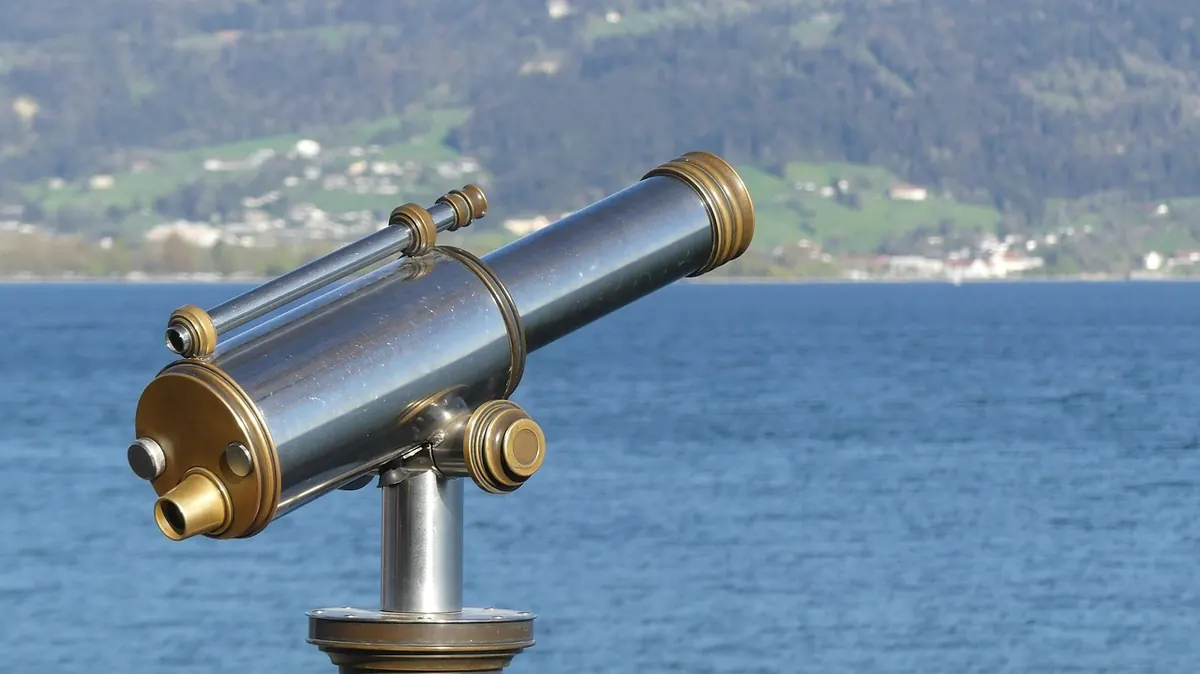
A telescope gives you aperture and magnification. Aperture gathers more light, so you can see fainter objects. Magnification reveals detail: craters inside craters on the Moon, cloud belts on Jupiter, the rings of Saturn, split double stars and globular clusters that look like scattered sugar. A modest 130mm reflector or a 90mm refractor can show these things well when the atmosphere is steady.
The catch is the support system. A telescope is only as good as its mount. A wobbly tripod will make every view frustrating. You also need to learn how to point it, focus it and perhaps collimate it. Some telescopes show the sky upside down or mirror-reversed, which can confuse star-hopping. None of this is difficult, but it is a learning curve.
Cost and the hidden extras
Binoculars usually cost less than a telescope that will genuinely satisfy a beginner. Avoid toy binoculars, zoom models and anything that promises extreme magnification. A simple pair from a known optical brand with a clear view and comfortable eyecups is a better buy.
Telescopes often come as kits, but the advertised magnification is not the important number. Aperture and mount quality matter more. Budget for the things that are easy to forget:
- A sturdy mount or tripod, if it is not included and reliable.
- One or two useful eyepieces, rather than a box of low-quality ones.
- A finder scope or red-dot finder that is easy to align.
- A red torch or dimmable light to protect your night vision.
- A dew shield or simple dew heater for damp UK nights.
- Safe storage and a case or cover for transport.
If money is tight, binoculars plus a star chart or planetarium app will take you further than a cheap telescope on a shaky mount.
Portability and UK weather
UK skies are rarely perfect. Clouds move in, haze softens detail and summer nights never get fully dark in the north. Binoculars suit this climate. You can keep them by the door, check the sky and step outside for ten minutes. A telescope session usually needs more commitment: carrying the mount, letting the optics cool, avoiding dew and packing up before rain.
If you have a dark garden and can leave a telescope set up, it will earn its place. If you observe from a balcony, a shared garden or a nearby park, binoculars are far easier to use often. The instrument you actually use is the one that teaches you the sky.
Ease of use and finding your way
Binoculars make learning constellations easier because they show a wide field. You can look at a star chart, raise the binoculars and see the same pattern, just with more stars. This is how many people learn to star-hop from one bright star to another.
Telescopes have narrower fields. Finding a target can feel like looking through a straw until you get used to it. A red-dot finder helps. So does starting with bright objects: the Moon, Jupiter, Saturn, the Orion Nebula or the Double Cluster. Keep magnification low at first, then increase it once the object is centred.
Steadiness matters with both. Hand-held binoculars above 10x are hard to hold still. If you choose 10x50s, consider a tripod adapter. For telescopes, a solid mount is not a luxury; it is the difference between seeing detail and chasing wobble.
UK sky performance: what you can actually see
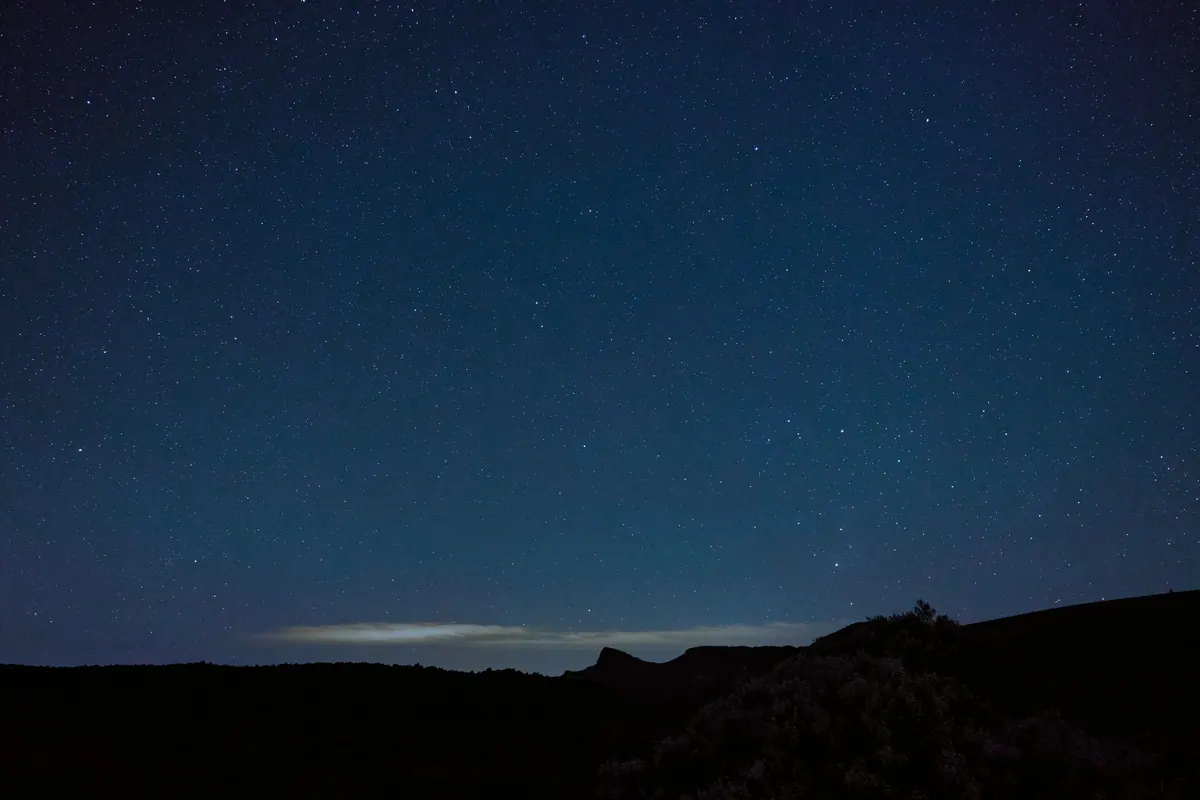
From a suburban UK garden, light pollution washes out faint galaxies and nebulae. Binoculars still show bright clusters, the Moon, Jupiter's moons and some double stars. Their wide view can also make it easier to locate objects in the first place. A telescope's greater aperture helps most under darker skies or when looking at bright, compact targets such as planets, the Moon and double stars.
For planets, a telescope wins clearly. For the Moon, both are rewarding, but a telescope shows more surface detail. For the Milky Way, the Pleiades, the Hyades and the Andromeda Galaxy, binoculars are often more enjoyable because you see the wider context. Under a truly dark sky, a telescope will reveal more, but binoculars remain a fine companion.
Do not judge either instrument on a night of poor seeing. UK weather varies, and a steady atmosphere is as important as aperture. Wait for nights when stars twinkle less, and give your eyes at least twenty minutes to adapt to the dark.
How to choose: a simple decision guide
- If your budget is limited, start with 8x42 or 10x50 binoculars and a good star chart.
- If you want quick sessions between clouds, choose binoculars.
- If you are most excited by planets and lunar craters, save for a telescope on a solid mount.
- If you have dark skies or can travel to them, a telescope will show more faint objects.
- If you already own binoculars, use them to learn the sky before buying a telescope.
- If possible, visit a local astronomy club or dark-sky event and look through both before you spend.
A sensible first purchase for most UK beginners
For most people starting out in the UK, a pair of 8x42 or 10x50 binoculars is the better first buy. They cost less, work immediately, travel easily and remain useful after you upgrade. Use them to learn the constellations, follow the Moon and catch bright planets. Then, when you know what you enjoy, buy a telescope with the largest aperture and sturdiest mount your budget allows.
Keep your expectations realistic. The views through a beginner's telescope will not match processed space images. They will be small, grey and subtle, but they will be real photons from distant worlds. That is the reward. Start with binoculars, learn your way around the sky, and let your first telescope be a considered step rather than a rushed purchase.
Photo: kisistvan77 / Pixabay